
Introduction
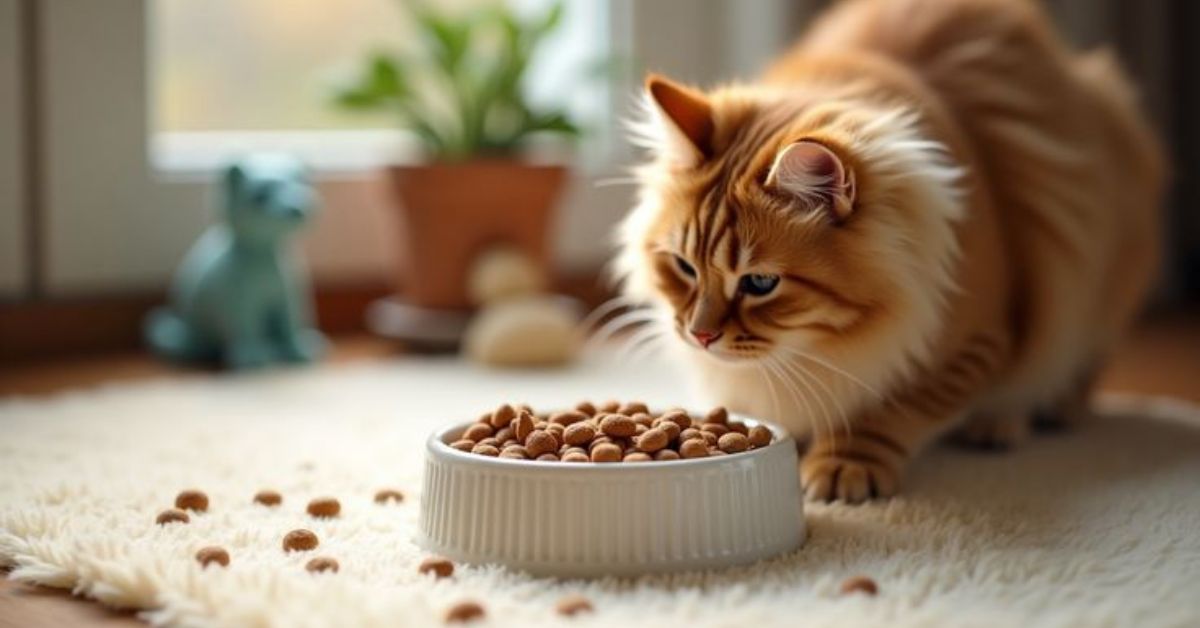
Cat burying food bowl behavior confuses many cat owners because cats often scratch around food using “invisible dirt.” This instinct comes from natural feline food caching behavior that helps cats hide leftovers, mask scents, and protect resources.
Some cats paw the floor after eating because of survival instincts, while others react to stress, anxiety, or discomfort around their feeding area. Understanding cat burying food bowl behavior helps owners know whether the habit remains harmless or signals an environmental issue.
What Is Feline Food Caching Behavior?
Feline food caching behavior describes a cat’s instinct to hide or bury leftover food for later use. Wild cats developed this survival strategy to protect food from scavengers and stronger apex predators.
Domestic cats inherited the same instinct from their ancestor, Felis lybica. Even though house cats no longer hunt for survival, their brains still respond to food protection instincts.
Common food caching behaviors include:
- Pawing the floor near food bowls
- Scratching nearby walls or tiles
- Covering food with towels or paper
- Dragging objects toward the bowl
- Walking away and returning later
Some owners call this the “invisible dirt” behavior because cats act like they bury food even when nothing exists to cover it.
The Evolutionary Reason Behind Food Burying
Wild felines survived by hiding food scents from predators and rival animals. A leftover meal could attract dangerous scavengers.
Cats possess highly sensitive Olfactory receptors that detect scents humans cannot notice. Because of this heightened sense of smell, cats instinctively attempt scent masking in domestic cats by scratching around the feeding area.
Wild Cats vs Domestic Cats
| Wild Cat Behavior | Domestic Cat Equivalent |
| Hides prey under dirt or leaves | Scratches tile or carpet |
| Masks scent from predators | Paws near food bowl |
| Saves leftovers for later | Returns to unfinished meals |
| Protects food resources | Guards feeding territory |
This evolutionary carryover explains why even pampered indoor cats still perform burying motions.
Why Domestic Cats Still Hide Their Food
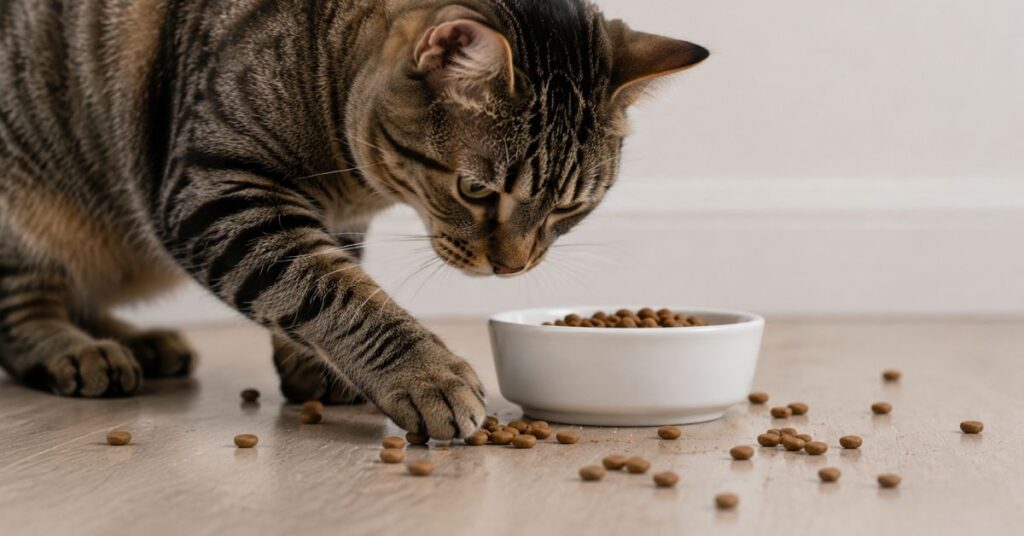
Several triggers can activate this instinctive feline food guarding behavior.
1. Natural Survival Instincts
Most cats bury food because instinct tells them to hide leftovers from danger. This behavior usually appears normal and harmless.
2. Resource Guarding in Multi-Cat Homes
Cats in homes with multiple pets often feel competitive around feeding areas.
A survey of 500 domestic cat owners found that cats in multi-pet households performed burying motions 40% more often than solo cats. This finding suggests that resource guarding now outweighs scent masking in many modern homes.
Cats may attempt to:
- Hide leftovers from other pets
- Protect valuable food resources
- Mark territory around the bowl
3. Anxiety or Environmental Stress
Some cats scratch excessively because they feel stressed or vulnerable.
Common anxiety triggers include:
- Loud noises
- Busy kitchens
- Nearby dogs
- Lack of escape routes
- Sudden environmental changes
Can anxiety cause cats to bury food bowls? Yes. Nervous cats often exaggerate instinctive behaviors when they feel unsafe.
4. Whisker Fatigue
Deep or narrow plastic bowls may overstimulate whiskers during meals. Cats sometimes react by pawing or scratching around the feeding area.
Switching to shallow ceramic bowls often reduces this issue.
The “Invisible Dirt” Cat Behavior Explained
Invisible dirt cat behavior happens when cats display cat burying food bowl behavior without actual material nearby. The cat’s brain completes the instinctive action even though modern flooring offers nothing to dig.
Tile floors, hardwood, and laminate surfaces often trigger cat burying food bowl behavior because indoor cats cannot use soil or leaves like wild felines. Instead, cats scratch smooth flooring around their bowl to mimic natural food caching instincts.
This cat burying food bowl behavior may look strange to humans, but it remains completely logical from a feline perspective.
The Feline Sensory Audit | A 4-Step Method
You can identify the exact trigger behind your cat’s burying behavior with this sensory audit.
Step 1: The Olfactory Test
Move food bowls away from:
- Strong cleaners
- Trash cans
- Air fresheners
- Scented candles
Cats dislike overpowering smells near food.
Step 2: The Texture Assessment
Replace plastic bowls with:
- Ceramic bowls
- Stainless steel dishes
- Wide shallow plates
This adjustment helps eliminate whisker fatigue.
Step 3: The Sightline Check
Observe whether your cat feels exposed while eating.
Cats prefer feeding stations that:
- Face outward
- Avoid blind corners
- Provide escape routes
- Limit surprise approaches from behind
Step 4: The Portion Trial
Offer smaller meal portions for one week.
Some cats bury leftovers because unfinished food creates “leftover anxiety.” Smaller portions reduce the urge to hide excess food.
Case Study | From Compulsive Buryer to Relaxed Grazer
Luna, a three-year-old rescue cat, displayed aggressive floor-scratching after every meal. She scratched kitchen tiles for several minutes and guarded her feeding area from other pets.
Initial Observations
- Multi-cat household
- Loud feeding environment
- Deep plastic food bowl
- Large meal portions
Changes Implemented Over 6 Weeks
| Week | Adjustment | Result |
| 1 | Switched to ceramic bowl | Reduced pawing slightly |
| 2 | Introduced puzzle feeder | Slower, calmer eating |
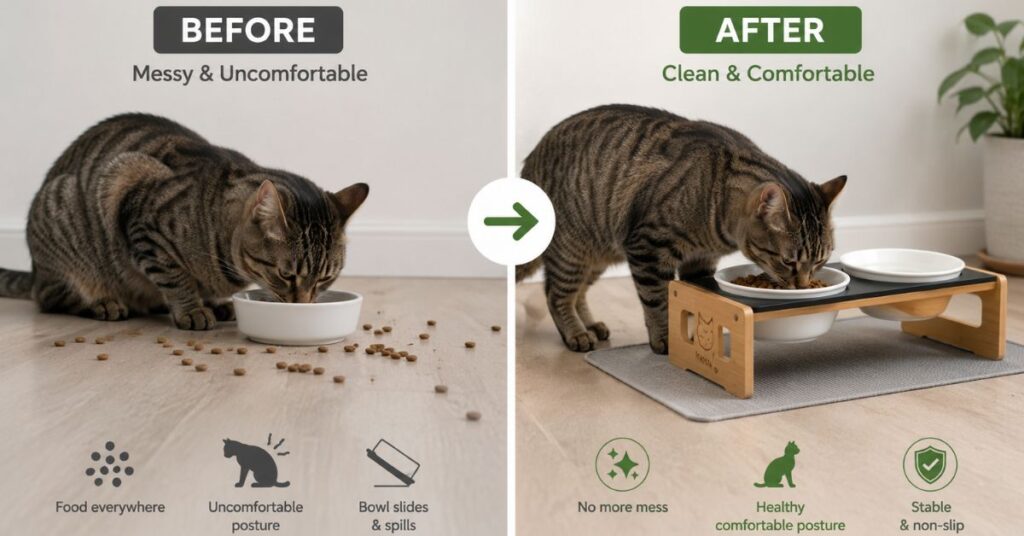
| 3 | Added elevated feeding station | Improved posture |
| 4 | Separated feeding spaces | Less territorial stress |
| 5 | Reduced portion size | Fewer burying attempts |
| 6 | Added calming pheromone diffuser | Relaxed feeding behavior |
By the end of six weeks, Luna stopped compulsive scratching and transitioned into relaxed grazing behavior.
Difference Between Food Caching and Litter Box Behavior
Many owners confuse food caching with litter-related habits.
Key Differences
| Food Caching | Litter Box Behavior |
| Happens near food bowl | Happens near litter box |
| Triggered by feeding instincts | Triggered by elimination instincts |
| Includes pawing near meals | Includes burying waste |
| Usually harmless | May signal litter issues |
If your cat scratches excessively outside the litter box, consult a veterinarian to rule out behavioral or medical concerns.
How to Stop My Cat From Scratching the Kitchen Floor
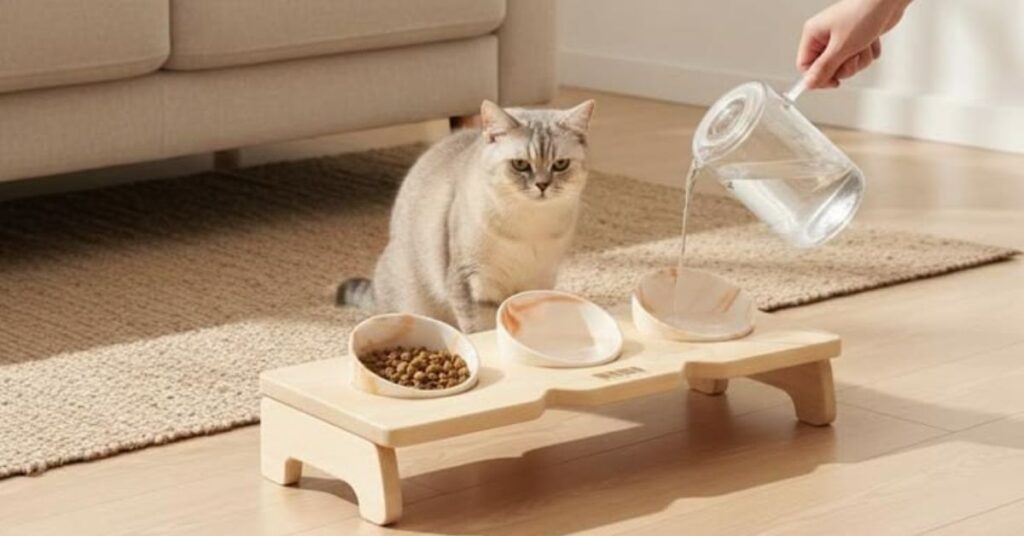
You may not need to stop the behavior entirely if it remains mild and instinctive. However, excessive scratching can damage flooring.
Helpful Solutions
Use Feeding Mats
Soft mats protect floors and reduce scratching noise.
Create Quiet Feeding Zones
Place food bowls away from heavy foot traffic.
Try Puzzle Feeders
Puzzle feeders reduce stress and engage natural hunting instincts.
Feed Smaller Portions
Smaller meals reduce leftover-related burying behavior.
Use Elevated Feeding Stations
Elevated bowls improve posture and reduce anxiety during meals.
Separate Pets During Feeding
Cats feel calmer when competitors stay away from their food.
Instinct vs Anxiety | How to Tell the Difference
| Instinctive Behavior | Anxiety-Driven Behavior |
| Brief scratching | Obsessive scratching |
| Calm body posture | Flattened ears or tense posture |
| Relaxed tail movement | Flicking or puffed tail |
| Stops after few seconds | Continues for minutes |
| Eats normally | Eats nervously or avoids food |
If your cat displays signs of stress alongside burying behavior, schedule a veterinary or behavioral evaluation.
FAQs
Does burying food mean my cat is full?
Not always. Many cats bury food because instinct tells them to protect leftovers, even when they still feel hungry.
Why does my cat paw the floor after eating?
Cats paw the floor after eating to mimic burying behavior inherited from wild ancestors.
Can anxiety cause cats to bury food bowls?
Yes. Stress, competition, loud environments, or environmental insecurity can intensify burying behaviors.
Should I stop my cat from burying food?
Mild burying remains normal feline behavior. You should only intervene if scratching becomes obsessive or destructive.
Why do cats scratch around food but not cover it?
Indoor cats lack dirt or natural materials, so they perform the motion without actually covering anything.
Do all cats bury their food?
No. Some cats never display food caching behavior, while others perform it daily depending on personality and environment.
Conclusion
Cat burying food bowl behavior may seem odd, but it reflects millions of years of feline survival instincts. Domestic cats still carry the urge to hide food, mask scents, and guard resources from potential threats. In most cases, scratching around food bowls remains completely normal.
However, excessive scratching can also reveal anxiety, environmental discomfort, or feeding-related stress. By understanding feline food caching behavior and performing a simple sensory audit, cat owners can identify the real cause behind the habit and create a calmer feeding experience.
A few small adjustments like changing bowls, reducing stress, or improving feeding locations can make a major difference in your cat’s comfort and behavior.

Ayesha Javed — Passionate writer sharing informative, engaging, and easy-to-read articles across different topics. Focused on delivering valuable content that helps readers learn, explore, and stay inspired every day.

Leave a Reply