
Introduction
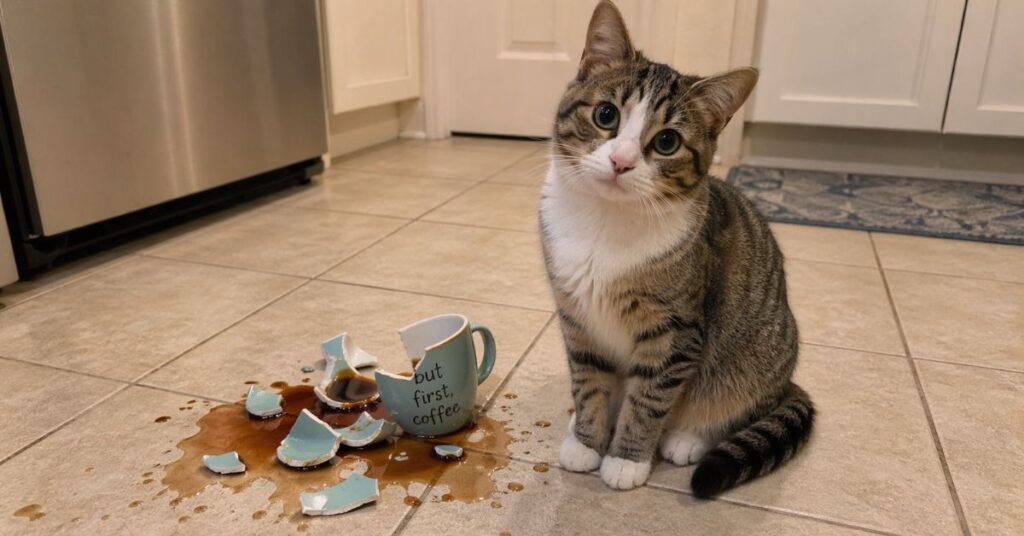
You sit on your couch, relaxed. Suddenly, you hear a loud crash from the kitchen. Your favorite coffee mug lies in pieces on the floor. Your cat sits nearby, looking innocent. You ask yourself, why do cats knock things over?
This scene plays out daily in millions of homes. Cat owners everywhere face this frustrating yet strangely funny habit. Some people think cats act out of spite. Others believe their feline friends simply enjoy chaos.
But the truth is more fascinating. Cats do not knock things over to annoy you. They follow their natural instincts. Understanding these instincts helps you live peacefully with your curious cat.
In this post, I will explain the real reasons behind this behavior. I will also share practical tips to protect your belongings. Plus, you will learn how to redirect this natural action into something positive. Let us dive in.
The Simple Answer to Why Do Cats Knock Things Over
The short answer is instinct. Why do cats knock things over? Because their brains tell them to investigate, play, or hunt. Domestic cats retain many behaviors from their wild ancestors.
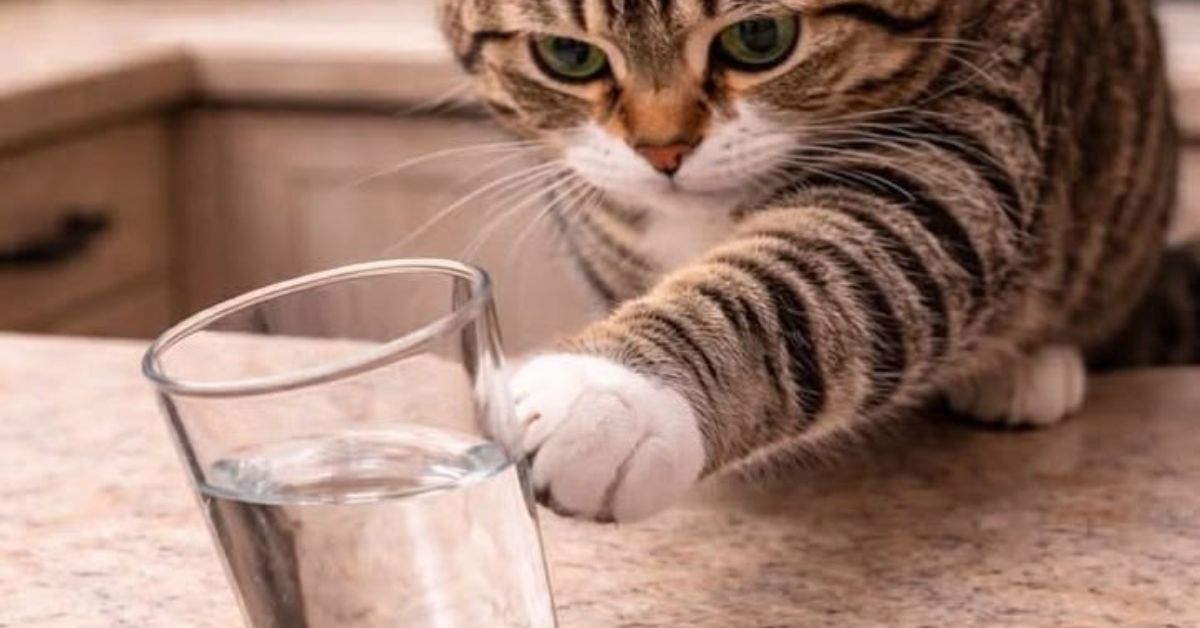
In the wild, cats use their paws to test objects. A paw tap reveals if something is alive, edible, or dangerous. Your house cat simply applies this same logic to your water glass or vase.
Cats also learn through cause and effect. They push an item, it falls, it makes a noise. That sequence entertains them. For a bored indoor cat, knocking over a pen becomes a thrilling event.
Let me break down the main reasons into clear categories.
5 Main Reasons Behind Feline Knocking Behavior
1. Natural Hunting Instincts
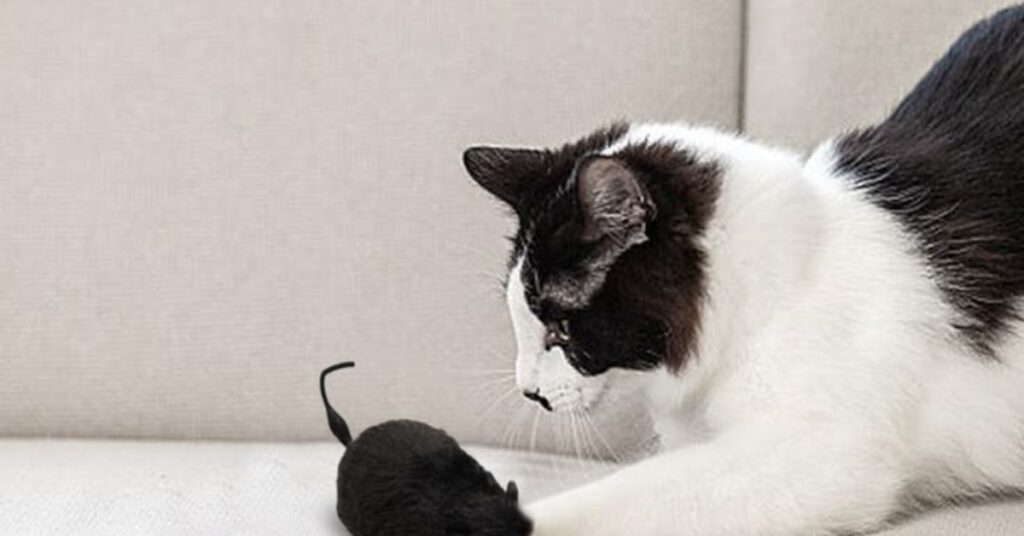
Cats are born hunters. Even well-fed cats retain this drive. In the wild, cats tap and swat at small prey to check if it is safe to grab. A mouse does not simply sit still. It moves, runs, and hides.
Your cat sees your phone charger or lipstick as a potential prey. The cat bats it with a paw to see how it reacts. When the object falls and moves, the cat feels satisfied. The hunt worked.
This feline knocking behavior mimics how cats interact with birds, insects, and rodents.
2. Boredom and Excess Energy
Indoor cats often feel bored. They lack the stimulation of outdoor life. No birds to chase, no trees to climb, no scents to investigate. So, they create their own games.
Knocking items off a table provides entertainment. The object falls, makes noise, and sometimes rolls. Your cat watches with interest. Then, the cat might jump down to inspect the item.
If your cat lacks toys or playtime, expect more cats to push objects off table actions. A bored cat is a destructive cat.
3. Attention-Seeking Behavior
Cats learn fast. They notice that knocking over an object makes you react. You might yell, run over, or pick up the item. To your cat, any reaction is better than no reaction.
Even negative attention feels like attention to a cat. You rush to save your glass. Your cat thinks, “Great, now my human is interacting with me.”
This cat attention-seeking action works especially well if you usually ignore your cat. The cat discovers a surefire way to get you to look.
4. Curiosity and Exploration
Cats use their paws like humans use their hands. They touch, tap, and pat objects to learn about them. A new item on your desk invites investigation.
Your cat wonders: Is this object heavy? Does it move? Does it make a sound? The only way to find out is to push it.
Cat curiosity behaviors drive much of this knocking. Your cat does not want to break your item. Your cat simply wants to understand it.
5. Playing and Practicing Skills
Young cats and kittens knock things over more often than older cats. Why? Because they practice their motor skills. A kitten learns how much force to use. A young cat hones its paw-eye coordination.
Think of it as practice for real hunting. Every swat at a bottle cap improves the cat’s ability to catch a mouse later.
Even adult cats continue this play. Feline pawing at objects keeps their reflexes sharp.
A Quick Reference Table: Why Your Cat Knocks Things Over
| Trigger | What Your Cat Feels | Typical Time of Day |
| Hunting instinct | “This might be prey” | Dawn or dusk |
| Boredom | “I have nothing else to do” | Midday or late night |
| Seeking attention | “I want my human to look at me” | When you are busy |
| Curiosity | “What does this thing do?” | When new objects appear |
| Play practice | “I need to sharpen my skills” | Active periods (morning/evening) |
This table helps you identify why your cat acts out. Match your cat’s behavior to the trigger. Then use the tips below to respond correctly.
How to Stop Your Cat from Knocking Things Over
You cannot completely stop a cat from being a cat. But you can reduce destructive cat habits with smart changes. Here are proven methods.
Secure Your Valuables
Place breakable items inside closed cabinets. Use museum putty to stick vases and frames to shelves. Arrange objects so nothing sits near the edge.
Do not leave glasses of water unattended. Put your phone in a drawer when not in use. These small changes save you from constant cleaning.
Provide More Playtime
A tired cat knocks over fewer items. Schedule two dedicated play sessions daily. Use wand toys, laser pointers, or ball tracks. Each session should last 10–15 minutes.
Focus on activities that mimic hunting. Drag a toy mouse along the floor. Let your cat stalk, chase, and catch. This satisfies the predatory instinct in cats in a healthy way.
Create a Cat-Friendly Environment
Give your cat better things to swat. Install shelves at different heights. Place scratching posts near problem areas. Offer puzzle feeders that reward paw use.
When your cat has appropriate outlets, cats bat items off tables less often. Your cat will choose the fun, permitted activity instead.
Ignore the Behavior When Safe
If your cat knocks over a non-breakable item, do not react. Do not yell, run, or give treats. Complete silence tells your cat that this action produces nothing interesting.
Only give attention when your cat plays appropriately. Reward calm behavior with pets and soft praise. Over time, your cat learns which actions get results.
Use Deterrents
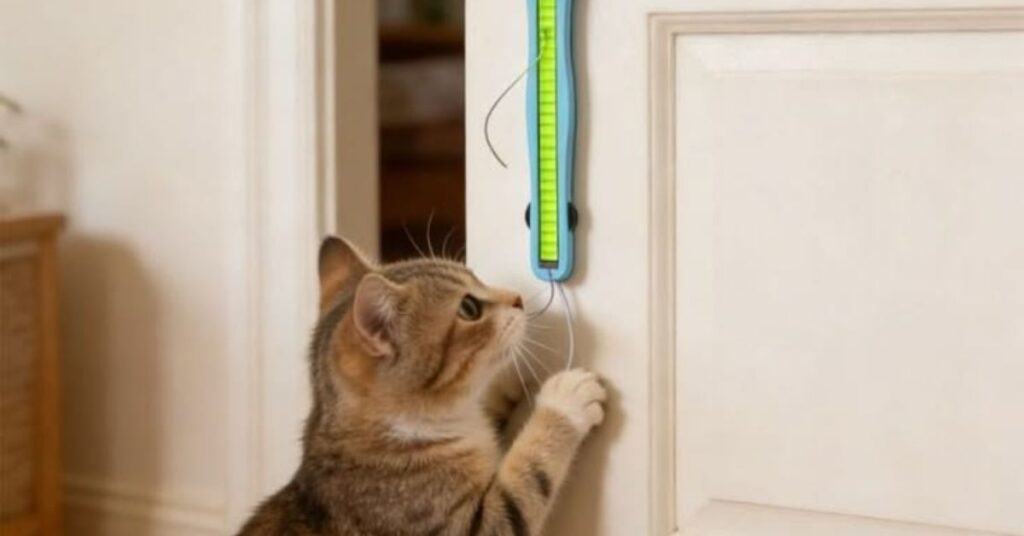
Place double-sided tape on table edges. Cats dislike sticky surfaces. Use motion-activated air cans that hiss when a cat jumps up. Aluminum foil on counters also works well.
These deterrents do not harm your cat. They simply make knocking things over less pleasant.
Real-Life Examples of Cat Knocking Behavior
Let me share three common scenarios. Each one shows how cats knock things over and play out differently.
Example One: Your cat waits until you leave the room. Then, the cat pushes your coffee cup off the table. You return to a mess.
Why it happened: Your cat felt bored. The cup sat at the perfect edge. The cat saw an opportunity for entertainment.
Example Two: You bring home a new candle. Your cat immediately approaches it, taps it twice, and watches it roll away.
Why it happened: Curiosity. Your cat had never seen that object before. The cat needed to investigate.
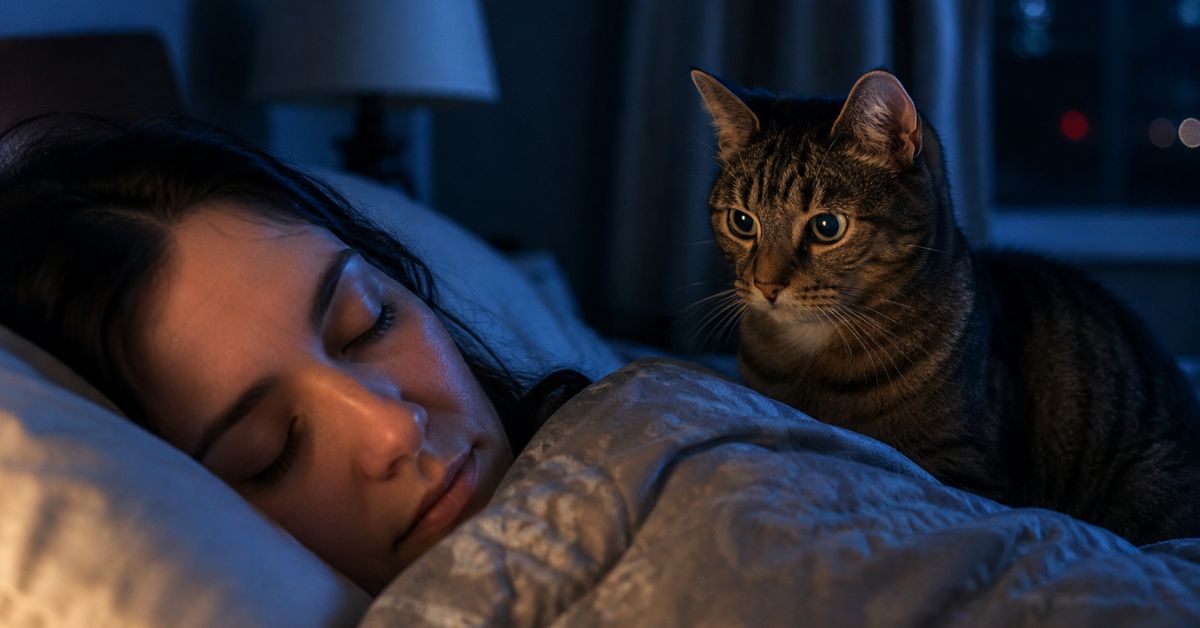
Example Three: You ignore your cat while working on your laptop. Your cat walks over and slowly pushes a pen off the desk. You look up. The cat meows.
Why it happened: Attention-seeking. Your cat wanted your focus. The pen worked like a call button.
What Not to Do When Your Cat Knocks Things Over
Many cat owners react poorly. Avoid these common mistakes.
- Do not punish your cat physically. Hitting or yelling damages trust. Your cat will not understand why you are angry. The cat will simply fear you.
- Do not chase your cat. Chasing turns the event into a game. Your cat learns that knocking things over leads to fun running.
- Do not lock your cat in a small room. Confinement increases stress and boredom. The problem will worsen.
- Do not declaw your cat. Declawing causes lifelong pain and behavioral issues. It never solves knocking behavior.
Instead, stay calm. Clean up silently. Then redirect your cat to a positive activity.
When to Worry About Feline Knocking Behavior

Most knocking is normal. But sometimes, it signals a health issue. Watch for these signs.
Your cat suddenly starts knocking things over after years of calm behavior. This change could indicate vision problems or cognitive decline.
Your cat knocks things over and also hides, stops eating, or vocalizes more. These signs suggest pain or illness.
Your cat obsessively knocks the same object for hours. This repetition might indicate compulsive disorder.
If you notice any of these patterns, visit your veterinarian. Rule out medical causes first. Then return to behavioral solutions.
FAQs
Q1: Why does my cat only knock things over at night?
Cats are crepuscular. This means they stay most active during dawn and dusk. Nighttime knocking happens because your cat has energy to burn. Your cat also enjoys the quiet. Every small noise sounds louder and more exciting.
Q2: Do cats knock things over for revenge?
No. Cats do not feel revenge or spite. They live in the present moment. When your cat knocks over your phone after you return from vacation, the cat simply feels bored or curious. Revenge requires complex thinking that cats lack.
Q3: Will getting a second cat stop the behavior?
Sometimes yes, sometimes no. A second cat provides social interaction and play. This reduces boredom knocking. However, two cats might team up. You could end up with double the knocked-over items. Introduce new cats slowly and carefully.
Q4: Why does my cat stare at me after knocking something over?
Your cat waits for your reaction. Cat attention-seeking actions rely on your response. The stare means, “Did you see that? Are you going to do something interesting now?” Your cat has learned that you react to falling objects.
Q5: Can training stop a cat from knocking things over?
Yes, to some extent. Use clicker training to reward calm behavior. Teach your cat a “leave it” command. However, remember that knocking is instinctual. Training reduces but does not eliminate the behavior.
Q6: Are certain cat breeds more likely to knock things over?
Yes. Active, intelligent breeds knock more often. Bengals, Siamese, Abyssinians, and Maine Coons top the list. These cats need extra enrichment. Without it, they will create their own activities,often at the expense of your shelves.
Final Thoughts and Helpful Advice
So, why do cats knock things over? Your cat follows natural instincts. Hunting, curiosity, boredom, play, and attention-seeking all play a role. Your cat does not act out of anger. Your cat simply behaves like a cat.
You cannot change your cat’s nature. But you can change your home. Secure breakable items. Provide daily play sessions. Add shelves and puzzle toys. Ignore safe knocking. Use gentle deterrents.
Remember that patience wins. Your cat will still knock things over sometimes. That is part of living with a feline. Laugh when you can. Clean up when you must. And always keep your favorite coffee mug inside a cabinet.
You and your cat can live happily together. A few broken items make small prices for the love and joy your cat brings.

Ayesha Javed — Passionate writer sharing informative, engaging, and easy-to-read articles across different topics. Focused on delivering valuable content that helps readers learn, explore, and stay inspired every day.





Leave a Reply