
Introduction
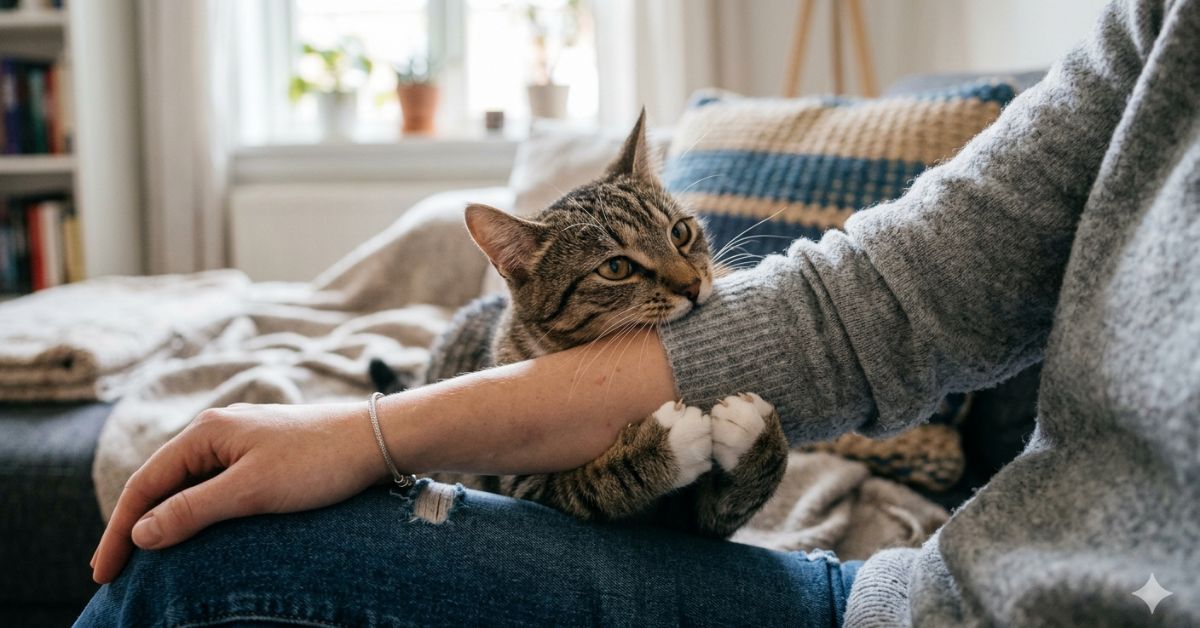
Why does my cat bite me? Cats bite for several reasons, including play, overstimulation, fear, frustration, pain, or instinctive hunting behavior. While some cat biting behavior appears harmless, other bites signal stress or discomfort. Therefore, understanding your cat’s body language helps you identify triggers before a bite occurs.
Moreover, once you recognize the cause, you can stop cat biting behavior through positive reinforcement, proper play sessions, and environmental enrichment. In this guide, you’ll learn why cats bite, how to interpret warning signs, and which strategies work best to reduce unwanted biting.
Why Do Cats Bite Their Owners?

Cats communicate differently than humans. Instead of using words, they rely on body language, vocalizations, and physical actions. Consequently, a bite often serves as a message rather than an act of aggression.
Common reasons include:
- Playful hunting instincts
- Petting-induced overstimulation
- Fear or anxiety
- Pain or illness
- Redirected aggression
- Territorial behavior
- Lack of socialization
- Attention-seeking behavior
Although every cat differs, identifying the specific trigger remains the first step toward solving the problem.
Common Types of Cat Biting Behavior
Playful Biting
Many kittens and young cats bite during play. They naturally practice hunting skills by chasing, pouncing, and grabbing moving objects.
Signs of playful biting include:
- Relaxed body posture
- Forward-facing ears
- No growling or hissing
- Quick release after the bite
Cat Biting When Petting
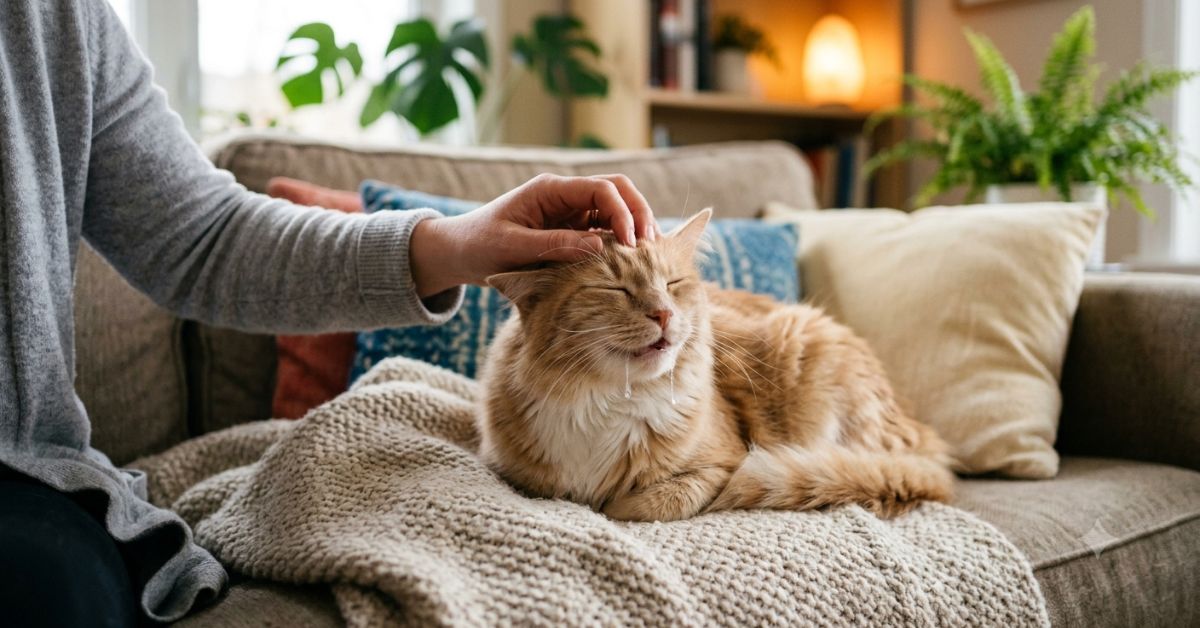
Some cats enjoy affection only for a limited time. However, excessive petting can overwhelm sensitive nerve endings.
Common cat overstimulation signs include:
- Tail flicking
- Skin twitching
- Dilated pupils
- Flattened ears
- Sudden head turning toward your hand
Fear-Based Biting
A frightened cat may bite when it feels trapped or threatened.
Triggers often include:
- Loud noises
- Unfamiliar visitors
- Sudden movements
- Veterinary visits
Redirected Aggression
Sometimes a cat becomes frustrated by an outside stimulus but cannot reach the source.
For example, a cat may see another animal through a window and then bite the nearest person.
Pain-Induced Biting
Pain frequently changes behavior. Therefore, sudden cat aggression often requires veterinary evaluation.
Potential medical causes include:
- Dental disease
- Arthritis
- Injuries
- Skin infections
- Neurological conditions
Sensory Mapping Guide | Predicting Your Cat’s Petting Threshold
Use this practical assessment tool to identify early warning signs before a bite occurs.
| Body Language Signal | Meaning | Estimated Time-to-Bite |
| Slow blinking | Relaxed and comfortable | Low risk |
| Gentle purring | Content and engaged | Low risk |
| Tail tip twitching | Mild irritation developing | 30–60 seconds |
| Increased pupil size | Rising stimulation | 15–30 seconds |
| Skin rippling | Significant discomfort | 10–20 seconds |
| Ears rotating backward | Defensive state | 5–15 seconds |
| Sharp tail swishing | High arousal | Immediate risk |
| Head turning toward hand | Final warning | Bite may occur instantly |
As a result, owners can stop petting before their cat reaches its threshold.
Bite Pattern Analysis Case Study

Meet Luna
Luna, a two-year-old rescue cat, frequently bit her owners during evening hours.
Initial Assessment
The owners reported:
- Daily biting incidents
- Excessive energy
- Limited interactive play
- Increased nighttime activity
Identified Trigger
After observation, the primary issue involved environmental under-stimulation. Luna lacked opportunities to express natural hunting behaviors.
Intervention Plan
The owners implemented:
- Two daily 15-minute play sessions
- Puzzle feeders
- Vertical climbing spaces
- Scheduled feeding routines
- Positive reinforcement rewards
Results After 60 Days
| Behavior | Before | After |
| Daily bites | 4-6 | 0-1 |
| Aggressive episodes | Frequent | Rare |
| Interactive play | Minimal | Daily |
| Relaxed behavior | Inconsistent | Consistent |
Consequently, Luna’s biting behavior decreased significantly because her owners addressed the root cause rather than the symptom.
The Interruption & Redirection Protocol
Preparation
Before training begins:
- Keep interactive toys nearby
- Remove opportunities for rough hand play
- Identify common bite triggers
- Prepare treats for rewards
Execution
When biting behavior begins:
- Remain calm.
- Stop all interaction immediately.
- Redirect attention to a toy.
- Reward appropriate play behavior.
Timing
Timing determines success.
Therefore:
- Redirect within seconds.
- Reward desired behavior immediately.
- Maintain consistency across family members.
Troubleshooting
If progress stalls:
- Increase play sessions.
- Evaluate environmental enrichment.
- Review trigger patterns.
- Consult a veterinarian or behavior specialist.
How to Stop Cat Biting Behavior
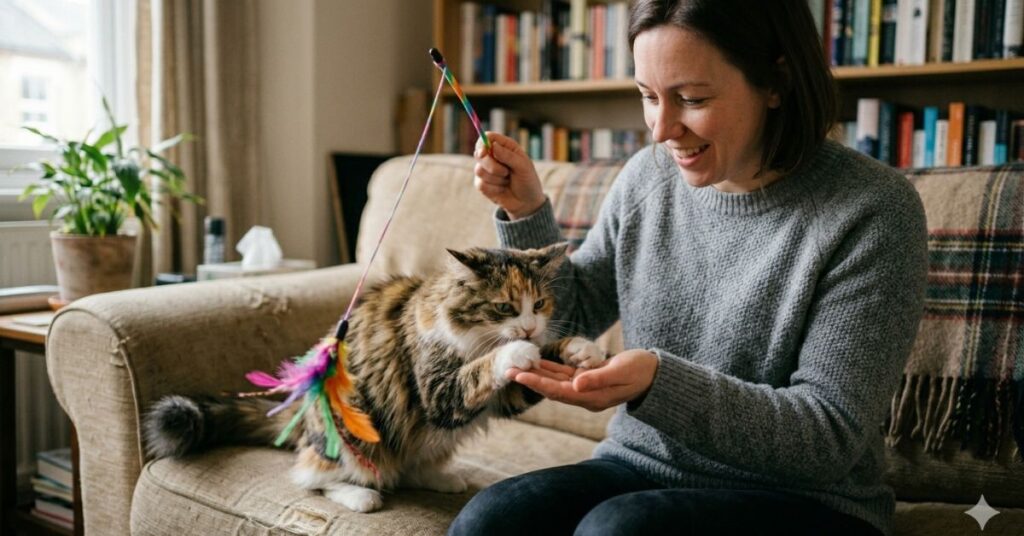
Increase Interactive Play
Cats require daily outlets for hunting instincts.
Effective toys include:
- Wand toys
- Feather teasers
- Motorized toys
- Puzzle feeders
Never Use Hands as Toys
Many owners accidentally teach biting behavior by encouraging hand wrestling.
Instead, always direct play toward appropriate toys.
Reward Calm Behavior
Positive reinforcement strengthens desirable actions.
Reward:
- Gentle interactions
- Calm sitting
- Appropriate toy play
Create a Predictable Routine
Cats thrive on consistency.
Therefore, maintain regular schedules for:
- Feeding
- Playtime
- Rest periods
Provide Environmental Enrichment
A stimulating environment reduces frustration.
Helpful additions include:
- Cat trees
- Window perches
- Scratching posts
- Food puzzles
When Cat Biting Signals a Medical Problem
Seek veterinary advice if your cat:
- Suddenly starts biting
- Shows signs of pain
- Becomes unusually aggressive
- Stops eating
- Hides frequently
Medical conditions often contribute to behavioral changes. Therefore, always rule out health issues before focusing exclusively on training.
Interactive Resources for Cat Owners
Body Language Quiz
Create short video-based exercises that challenge owners to identify:
- Relaxed behavior
- Overstimulation
- Defensive behavior
This approach helps owners recognize warning signs before bites occur.
Stop the Bite Video Series
Short demonstration videos can teach:
- Passive redirection
- Proper toy use
- Safe handling techniques
- Reading feline body language
Downloadable Bite Log Template
Track:
| Date | Time | Trigger | Severity | Notes |
Over time, patterns often emerge that reveal specific triggers.
FAQs
Why does my cat bite me gently?
Gentle bites often represent affection, playfulness, or attention-seeking behavior. However, repeated gentle biting can also indicate overstimulation.
Why does my cat bite me while I pet it?
Many cats reach a petting threshold. Once stimulation exceeds their comfort level, they communicate discomfort through biting.
How do I stop my cat from biting my hands?
Use toys instead of hands during play, reward appropriate behavior, and consistently redirect biting attempts.
Is cat biting a sign of aggression?
Not always. Many bites result from play, overstimulation, or communication rather than true aggression.
Should I punish my cat for biting?
No. Punishment often increases fear and stress. Instead, use positive reinforcement and redirection techniques.
Conclusion
Cat biting behavior rarely occurs without a reason. Whether your cat bites because of play, overstimulation, fear, pain, or frustration, understanding the underlying cause allows you to respond effectively. Moreover, by learning feline body language, increasing enrichment, and using positive reinforcement, you can significantly reduce unwanted biting. Most importantly, address warning signs early and consult a veterinarian whenever sudden behavioral changes appear. With patience and consistency, you can build a safer and more trusting relationship with your cat.
Gentle bites often represent affection, playfulness, or attention-seeking behavior. However, repeated gentle biting can also indicate overstimulation.
Many cats reach a petting threshold. Once stimulation exceeds their comfort level, they communicate discomfort through biting.
Use toys instead of hands during play, reward appropriate behavior, and consistently redirect biting attempts.
Not always. Many bites result from play, overstimulation, or communication rather than true aggression.
No. Punishment often increases fear and stress. Instead, use positive reinforcement and redirection techniques.

Ayesha Javed — Passionate writer sharing informative, engaging, and easy-to-read articles across different topics. Focused on delivering valuable content that helps readers learn, explore, and stay inspired every day.








Leave a Reply